Tuesday, December 16, 2008

Funding an Idea vs. a Company

What it is the difference between innovation and entrepreneurship?

In a recent post by my friend Allan Young on "The Startup Myth" he argues that what we need is entrepreneurs not start-ups. To understand the difference he makes the vivid point that entrepreneurs build companies not just try to get money for an idea. The end game is a viable, growing, successful business - the idea is merely a supporting player. This distinction suggests that entrepreneurship and innovation are not the same thing. This post attempts to make that distinction.

First, we need some definitions to work with. From the Web....
  • Entrepreneur: "A person who takes the risk of organizing and operating a new business venture."
  • Innovation: "The process whereby ideas for new (or improved) products, processes or services are developed and commercialized in the marketplace."

Based on these definitions its easy to see that not all innovations are appropriate for the entrepreneur, e.g. 'new and improved, version 3.0, and next generation.' McDonald's Big Mac was created to better compete in a local market. Conversely, there are opportunities for the entrepreneur that don't require an innovative idea, e.g. franchises and opening new markets. The Egyptian company building the cell phone network for North Korea is very entrepreneurial, but not necessarily innovative in the sense that cell phone networks are relatively mature (although I'd guess their way of doing this is different).

The economic model of angel investors or venture capitalists drives them to focus on the intersection because that is where the home runs are. Financially, for every 10 investments made only one will be successful, so EVERY opportunity funded has to have the chance of being the next big thing that covers all the other investments and produces a decent return for the entire portfolio. Since successful entrepreneurs are much scarcer than good ideas, the emphasis is nearly always on the team and not necessarily the idea. As proof, there are people who could get funding without an idea; but no idea will get funded without people.

So if your looking to fund a company what type of innovations should entrepreneurs pursue?

Weaving the ideas of Trout's "Differentiate or Die", Christensen's "Innovators Dilemma" and Kim & Mauborgne's "Blue Ocean Strategy" the best ideas are those that:
  1. Disrupt the current thinking about how the 'category' is defined in people's mind
  2. Change the way business is done
  3. Find net-new money from clients rather than redistributing an existing pot

Hindsight suggests that the successful new companies solve all three requirements simultaneously. They define new categories and hence reap the rewards as it grows as the recognized 'leader' because order of entry is very important. They apply a different business model to the problem at hand - be it distribution model, how and where value is exchanged, mix of product and services, or something nobody else thought of yet so that competitors have to say 'we can't do it that way'. They create a new line-item in people's budget so it isn't so obvious that the money is coming from incumbents who fight to maintain their revenue streams. The definition of competition is the sales guy whose commission check you take.

In summary, violate every possible rule you've been taught and do the impossible:
  1. Create a need then fill it; people can't tell you what they don't know so don't ask them.
  2. Do things the industry doesn't do; don't do things they do do.
  3. Rearrange the rank order of attribute importance; if speed is important sell power consumption.
Talk about risk! If you don't take on all three aspects at the same time any established player can squash you.
  • A start up in an existing category will suffer from the classic 'fear, uncertainty, and doubt' sales strategy of the market leader. So, damn them with faint praise as you explain that you do something different.
  • A start up that doesn't change the rules of the game, will lose since 'those with money write the rules.' So find that differentiator and make it your sole beachhead.
  • A start up that doesn't make people see a problem in a new light will always fail to overcome the inertia to change. So be patient with your audience as they learn to change their way of thinking.
Borrowing some oft-cited examples:
  • Southwest Airlines: provided access to second-tier markets; flew point-to-point, not hub-and-spoke; and made affordability the ONLY driver
  • Cirque-du-Soleil: circus with a plot line in a strange language; stay-put, integrate music, get rid of animals, stars, and travel; theatrical value vs. individual acts
  • Facebook: organize student communities; open the platform to third parties, ignore music; think of it as a cocktail party and not a teenager's bedroom (source)
I spent a good part of the year working and reworking a business plan that focuses on the 'architecture of influence' and social media. In the process I have sat across the table from investors and answered a lot of questions. They want to hear about scale (how will this pay off the others bets we made?), barriers to entry (how will you prevent others from ripping off the idea?), monetization (where is the annuity revenue stream?) and experience (do you have any idea what you're doing?). I probably focused on the innovation side too much, I need to go back to simultaneously addressing all three risks.

In this space "Are you nuts?" is a compliment and means your on the right track.

The Social Side of Search

Is search social media?

In response to Jermiah Owyang's query on twitter I said "maybe". Since 140 characters is a bit short, here's my thinking.

The original question came from part of a post entitled 'so who do consumers trust?' It includes the following with italics added:

50%: Say they trust portals/search engines: In Google We Trust, is that Charlene Li frequently used to tell me, and it still holds true. When you look closely, the search engine results in Google are really social recommendations. How so? The Google algorithm (while I’m over simplifying) puts a great deal of weight on how humans organize, link, and create content.

So to the question at hand: Are search results social media?

First, some definitions and assumptions:
1. Search refers to organic results and not paid.
2. Media are vehicles by which messages are carried, e.g broadcast media, online media, and social media.
3. Social is a fuzzy concept, but generally refers to people interacting in communities or groups.

Given the above, search results are definitely a medium by which a message is conveyed. "This page has several things we think you'll find relevant based on the keywords you entered." Reducing a bazillion pages to a simple set of 3-line bites that can be quickly scanned is the essence of search engines. With the help of the people writing those pages we have a very powerful medium for getting a message out.

But is it social?

The original point was that the engines use the human activities of organizing, linking and creating content (in part) to produce the set of recommendations shown. This makes it a set of 'social recommendations'.

In the strictest sense it is not direct, social interaction in the way word-of-mouth is. Nor is there an opportunity to clear up the issues of intent and context in the way that conversations allow. Finally, there is a fair amount of manipulation going on to get to the top of the page - when that is the sole objective it is only social to the extent that bullies are also social.

The second thought was about the search engine's role in the process. In a group or community, participants play an active role and usually stay involved. Search, and Google in particular, is a way station. They can be described as the world's largest and most successful travel agencies. Their mission is not to just organize the world's information but more importantly put us on the correct path toward a destination. If 'time on site' is a measure of engagement, then Google doesn't play a significant role as an active member of a community.

However, in a broader sense - what other medium do we have that allows us a peek at how others view the world? How do we find like minded individuals? How do we coalesce around the common interests that are the new demographics? Certainly advertising media don't provide this; they simply have another objective to achieve. It seems that in this sense search results provide an abstraction or snapshot of a set of human endeavors geared at telling their story. Since the algorithms look over their shoulders at what other people are doing (thinking?) it could be argued that they are in fact social recommendations.

So, I came up with the 'maybe.'

Why does this matter? Because the language of social media often defines how people talk about their needs, wants and desires. Thus, it should certainly be used in search marketing - both natural and paid. In fact, your brand monitoring efforts should report on the popularity not only of key words and their relationship with one another but also where they are likely to occur and with what other concepts and ideas to they relate to.

Friday, December 12, 2008

Marketing 2.0 as Defined by IT

What do IT deployment strategies offer marketing?

Amy Shuen's "Web 2.0: A Strategy Guide" offers a wide-ranging view of how business can work in this environment. Of particular interest is the relationship between 'Value' and 'Function'. In the IT world, only the most valuable projects get funded. Those that don't slip into the hack or do-without mode. SaaS, or software as a service, sits between the Build/Buy models and the muck about with Excel and hope it works.

SaaS and its 'on-demand' cousins create an opportunity to extend the reach of a solution by changing the cost-model to one that is shared across a group of clients. This effectively allows SaaS models to reach the long tail of business opportunities. Companies that can not afford to make or buy now can 'rent' so to speak. If the functionality is good enough, the competitive landscape changes radically because their is a real fuzzy line between the 'haves and have-nots'.

From the book:

It seems that social media, and its relationship to marketing objectives, falls into the same pattern. There are certain activities that clearly fall into the high-value therefore we control category. There are other marketing activities that accrue like the post-it notes illustrated above - ideas that may never see the light of day.

Certainly people are talking about things, i.e they are 'hacking' in the sense that it is not highly organized. In between are the functions that a community needs - sharing, opnionating, feedback, and sometimes bitching. If we consider social media as a service then it extends the reach of marketing into the long tail of both customers and marketing activities. To be sure, there are trade-offs on both sides but it seems that it is way to find common ground and level this playing field as well.


Completing the Social Graph

How many connections does a marketer need?

Mark Niehaus recently wrote a piece about the idea of linking social network data with traditional data to create a complete picture of every person in the US.

For a guy who spent a lot of time in the trenches of data analysis and systems; I love the challenge - in fact parts are being worked on right now by numerous players. For instance, we routinely append demographic, psychographic and purchase data to social network profiles to help understand where and how social networks are used.

The marketer in me has a different opinion. A couple of thoughts:

1. While 'data-driven marketing' is great, the ultimate marketing objective is more strategic: How do we design and deliver goods that satisfy people's needs? The risk of using a humongous 1-to-1 database is tempting, but that is one-directional.

2. Influence, the mystical concept of one person's leverage on another (or many), is a function of trust and relevance. This implies that there isn't just one social graph for marketing, but a bazillion - one for each decision being made.

3. Even if we know the connections, the interests, and the purchase history - do we have the restraint to use it appropriately? Sure, the data is public or generated from opt-in but unless we have an invitation to use it; we shouldn't. I was at an open house the other night where Governor Huntsman was also attending and talking with one of our joint connections. But unless someone brokered that introduction I wasn't going to barge in and show him my wares. I had all the data, the interests and connections - but the timing was in appropriate.

4. Data is a like a silent movie - we can see a lot things, but can't hear anything at all. Those verbal cues are critical for developing relationships.

Thursday, December 11, 2008

Language Skills

What else can we learn from social media?

How your company and brand are portrayed is an obvious use of social media. Another application is understanding a new market. If your targeting either a new audience or entering a new category, understanding the language is key.

Working with a client on understanding a new category segment we found the following:
1. The sophistication of the language is very different, even when talking about the same thing.
2. Language and terminology can be perceived as either a barrier to entry or a protective shield around a club of those in the know.
3. There appears to be a trickle down effect of language -certain sources often create phrases or 'sound bytes' that work there way into the vernacular. (It would be interesting to trend the adoption of these over time - like a diffusion model.)
4. The hard part is identifying the appropriate terminology. Since social media monitoring typically works with a list of key words it becomes an iterative approach to find the next set of words.

Linguistic and semantic skills are required to leverage social media this way.

Saturday, November 29, 2008

Saving is The New Message

What are financial services companies saying to customers?

ING recently launched the "We the Savers" program - a declaration of a personal financial independence. They're taking a simple, interactive and social approach to spread some thoughts on responsible saving. They're not telling us what to do as much as asking us to agree and comment.

While I applaud the effort it could do more - possibly feed our message directly to congress.

I hope this grows.

Thursday, November 27, 2008

Impact of Social Media

Is it ROI or IOR?

Kyle Flaherty wrote a post about measuring Social Media the other day. I think its got the priorities straight - it's not only about the financial return of a(ny) tactic, but rather the impact on the business as a whole. For social media: Impact of Relationships.

It would be a bad for business to always pick the tactic or campaigns with the highest ROI. Why? Because measuring a purely financial outcome could result in disjointed, uncoordinated, and contradictory programs. We certainly don't let manufacturing pick their best ROI-project and sales theirs'. We might be making widgets and selling gadgets.

Key Question: As a business, why are we better off implementing this plan versus that plan?

Note: I thought ROI was invented by people trying to figure out where to invest scarce resources. I like Kyle's view better - promoting big-ROI projects got you a bonus and a better job.

Wednesday, November 26, 2008

Designing Social Media Monitoring

How does social media fit on a dashboard?

Instrument panels are designed to give a person the ability to understand how a system is working in an instant - no "Huh, what does that mean?" moments. In addition to functional clarity they are aligned strategically in the sense that the sum total of the information tells us how well we're proceeding toward an objective.

So, what do we do with social media?

As a 'media' we need to understand it relative to other media. If we think of media as a continuum from broadcast (in the broadest sense) to social (in the human sense) then there are two dynamics working. First, control, ownership, targeting and repetition of the message. Second, the weight given the message by the recipient. When broadcasting we have a lot of the former at the expense of influence which is eroding across tactics. When socializing we sacrifice the scalability of broadcasting for the nuance of personal conversations. I tend to think of media plans holistically as a number of working parts - almost in a top down - awareness, bottom up sense - personal recommendation.


As a tactic we need to understand how to measure it. We love to put labels on things and they have a habit of sticking well beyond their sell-by-date. For example, using 'online' and 'offline' as a means of categorizing media may be appropriate for a temporal campaign being optimized as it runs, but they do not belong in a strategic view of a business. Marketing programs should be designed to be inline with consumer expectations and resist the urge to use tactics to group things. The reason: different categories tend to grow their own measurement systems; that can't be later combined. Just consider Reach and Frequency vs. Impressions of TV and online broadcasts. Metrics should focus on their contribution to overall objective and not on the data that happens to be spun off by the tactics.
Social media is real - has been for a long time. The fact that some tactics now fit within the marketing spend is the new kid on the block. Rather than immediately carving out a place on the dashboard for this new data one should first examine how to roll it into business performance metrics - acquisition, retention and lifetime value.

Tuesday, November 25, 2008

Book Recommendation: Back of the Napkin

Why should you read this book?

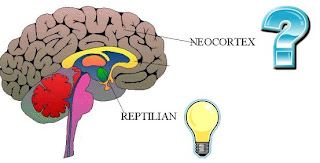
Dan Roam's "The Back of the Napkin" provides a great framework for visually presenting ideas - any idea, even if you can't draw. In fact, drawing isn't the point at all - its that the brain is hard wired to assimilate information through sight (or learning) pathways. The framework aligns questions like who, what, where and why with vehicles like portraits, charts, decision trees, and trends. To pick the right approach the SQVID is like a stereo equalizer to find the right approach.
So, the reptilian part of our brain 'gets it' faster than the 'thinking' part.


Friday, November 21, 2008

Marketing Illdefined

Why are the terms marketing and sales so confused?

I usually like Michael Gass' Fuel Lines, but this morning he has a quote that got me riled up.
“The sole purpose of Marketing is to sell more to more people, more often and for more money.”

This is from the person who brought us "New Coke", Sergio Zyman.

That sounds like the definition of sales and since Sales doesn't usually report to Marketing there must be something else going on. Sales is compensated for delivering the revenue and Marketing is responsible for greasing the wheels so to speak. How? By understanding better than anyone else how to satisfy their audience's needs.

For Marketing sales is an outcome, not an objective.

Tuesday, November 18, 2008

Take Two and You'll be Okay

How did Motrin get its recent headache?

This week's Warhol ad is one by Motrin, targeting mom's who carry their babies in a sling/wrap/pouch etc. thinking that these moms might need relief from pain. Specifically, the pain of carrying a baby this way. So, far so good because there might be a real need - I don't know. However, the manner and tone of the ad's execution suggests that the reasons for doing so have to do with fashion and trends and that it is a good idea 'in theory'. Hmm., not so good.

While the ads have been around for a month, the backlash reached critical mass this past weekend, particularly on Twitter . The result was a retraction of the ad as well as an apology from the maker - McNeil Consumer Products.

Three thoughts:
  1. Why the backlash? My sense is that the ad makes a 'loser' out of the very target market they wanted to reach. This violates rule #1: Never treat the intended audience with disdain. I'll give the makers of the ad the benefit of the doubt and think their intent was to use a bit of humor, but that is a very high-risk strategy.
  2. The role of social media, already being debated with a question about a groundswell of the many versus the Twitterverse of a few, is no longer an 'if' question. The discussion should use the Big Seed vs. Tipping Point ideas as a starting point on understanding influence better.
  3. The business school cases are probably already in draft mode. McNeil was considered a model of responsiveness when Tylenol was tampered with in '82 resulting in 30+ million bottles removed from the shelf. The causes are by no means equal, but the way the two issues were handled 25 years apart ought to make for some interesting discussion over the role and evolution of communication.

Friday, November 14, 2008

Curated Content and Brand Heritage

How does one manage consumer generated content?

In an interview with eMarketer, Jack Meyer talks about striking the balance between brand-control and brand-hijacking. He suggests that content should be treated as submissions to a juried art exhibit - a group of experts and trusted advisers select the pieces that are put on exhibit.

For this strategy to work one must be sure of the objective and intent of the brand and select elements that reflect the essence and not the trappings of the brand. As in the art world, there will be good exhibits and the not-so-good menagerie of the unrelated. The curator of a major exhibit or a museum has an important and unseen job in selecting the appropriate objects; the best have a strong vision and a sense of purpose.

Brands embarking on a consumer generated content strategy need to choose the curator first in order to establish the theme. And since we're talking about brand heritage, this shouldn't be the intern.

Wednesday, November 12, 2008

The Ultimate Question

How would we market if there were no media?


With all due respect to Fred Reichheld and recommendations; the real challenge today is how to market under the presumption that a) media is loosing its effectiveness, b) web sites are no longer attractive destinations, and c) cocoon spinning is the new past time?


Taking a long term view, it may be that what need you solve and what you stand for become more important than products, messages, offers and other tactics. It seems that neither direct response nor broadcast branding are appropriate. I'm reluctant to go down the 'grassroots', 'movement' or 'groundswell' paths because they conjure up a different set of images -- but there's something there to consider.

So, designing marketing programs starts with some soul searching of what is, exactly, that we do? It isn't the "we're in the transportation as opposed to train business" (apologies to Ted Levitt's 'Marketing Myopia'); it has to be more personal than that.

The Acid Test for Social Media

How do you know if you should 'do' social media?

Had the opportunity to meet and chat with Trey Reeme at SWOMFest. He works for a credit union and a recent post of his succinctly answered the question:

"If you’re not first doing something compelling in the real world, don’t bother getting into social media."

TDECU's "Young and Free Texas" project is a prime example of doing something both useful and compelling. And guess what, it's not about a product or even a brand - its about supporting an audience at its core, emotional level.

As the economy shifts from consumption-centric to something else (and I'm not sure what yet), the focus of marketing should be on understanding what the long term benefit of the relationship is. For some products, e.g. cars, electronic retailers, etc. - the answer might just well be that there isn't a real reason. Companies that can't answer 'what benefit do we deliver and what are we known for' are likely to be roadside litter. >

Friday, November 07, 2008

Complex Moving Parts

What has social media done to marketing?

On one hand it has created an extremely complex and daunting set of relationships and touch points out of a variety of technologies. On the other hand, when it all comes together it runs very smoothly -- like this 1850's Tobias watch.

Designing marketing programs today requires using a wide variety of tools, all in sync with another to achieve a measurable objective.

Thursday, November 06, 2008

Social Media as Predictor

How well does social media predict things?

The day before the election Jeremiah Owyang published a wealth of stats on the Obama and McCain supporters, friends, and fans use of social media. The bottom line was at least a 3:1 advantage in favor of Obama. As we now know the election was much closer: a six (6) point spread between the two candidates, 52-46.

Funny thing - that difference is roughly the same as the point spread between Democrats and Republicans that have a social network profile: 30% to 23% (based on 5,000 registered voters 18+).

So there is clearly a difference between having social network profiles and using social media. The comments and links in the original post to other analyses support the point that engagement is higher, e.g. the Kiva numbers. What we don't know is that elusive thing called "intent" or "purpose."

I wonder if it comes down to a society vs. individual question: We're all in this together vs. I'm going alone and don't need much help. If so, we need to figure out how that relates to marketing.

Monday, November 03, 2008

SWOMFest Summary

What was the key take away from a word-of-mouth conference?

Had the privilege to attend SWOMFest 1.0 last week in Austin - a gathering on 'word-of-mouth'. For an excellent recap of the events see Spike Jones' blog at Brains-on-Fire.

My take: word-of-mouth is an outcome, not an intention. You have succeeded when positive word-of-mouth occurs.

To succeed you must satisfy several criteria:
  1. Know what you're doing and why: Purpose
  2. Communicate through vehicles that tug at peoples' emotions: Stories
  3. Recognize that things change in ways you can't predict: Adaptation

As Trey Reeme of Young&Free Texas said: be the mouthpiece, not the mouth.

Monday, October 27, 2008

Political Media

Where do viewers watch?

AC Nielsen and the Hollywood Reporter recently published some media consumption habits in the battle ground states by voter registration. Most of the commentary is about the media buying strategies of the campaigns. The last sentence is:
“Ads contribute to the overall narrative of the campaign and can
be used effectively as a tactical tool to shape press coverage,” he
said. “But overall, a lot of money is wasted.”

Given the nature of politics, it is unclear what 'wasted' might mean. Does an ad change a given vote (a direct response mind-set)? Probably not. Does a continuous presence affect tone and preference (a branding mind-set)? Possibly.

Are large TV buys the fastest way to spend money - yes.

Some tidbits: The networks that skewed one way or the other (index of viewership compared to average).
Republicans: Speed and Fox News
Democrats: BET and VH1
Independents: Speed and CNBC

And yes republicans lean toward Fox as a source of news (+48) while Democrats decidedly do not pay attention to same stories (-28).


Note: registration may be required to see the THR article.

Wednesday, October 22, 2008

Social Media and Counterknowledge

What is the biggest challenge of social media?

Stepping back from the marketing and social media question for a moment and thinking about the spread of information in general then the rapid diffusion and adoption of ideas has to be one of the greatest benefits of social media.

However, the distribution of 'misinformation packaged as fact', or what Damian Thompson defines as Counterknowledge in the book of the same name, may be one of the biggest downsides. In the past pseudo-history, quack medicine, and bogus science lived among the "cultic milieu" at the edge of society where it was tolerated and contained because the structure of society worked to weed out the riffraff. However, with the removal of hierarchy in our daily lives (school, church, jobs, government) we no longer rely on others to tell us what to believe but adopt ideas as part of our own brand. Thus the burden of proof, if one is even required anymore, now falls on the individual.

Social media, with penetration getting well beyond any tipping point, makes the transfer of ideas both meteoric, morphable and unfortunately too often presumed as 'true'. The result is the increased repeating of ideas and opinions based on facts that aren't facts. Example: pretty much any negative political campaign leverages counterknowledge.

If for no other reason than avoiding unwanted associations, marketers should listen to what now crosses easily into the mainstream.

Social Media Data and Our Day Jobs

How can social media data improve our lot in life? (or at least at work)

There is no doubt that social media produces a fire hose of data; there's even a Yahoo! Pipes application by that name. The question at the recent DMA in Las Vegas about social media was: How to make it actionable?

Now this audience is biased to a direct response view of things where every tactic has to be measurable in terms of sales, conversions, or other hard action. So, there is probably not much headway in using the 'Listen, Join, Participate' line of thinking. But how can social media data be used in direct marketing?

Here are three thoughts.

  1. the language people use to discuss a problem becomes very evident and provides excellent ideas for messaging, offers, and copy
  2. the social networks people use can be over laid onto a house file for both segmentation and modeling activities
  3. the creative assets people produce can be leveraged and shared as part of the brand's community through other media

UPDATE: an article in MediaPost's Search Insider made similar points. Came across it later in the day.

Friday, October 17, 2008

Communities Impact Businesses

Just how do you measure the impact of communities?

I had the pleasure of discussing this question with Darcy Bevelacqua, a database marketing expert now looking at the impact of social media on business performance.

My takes:
1) It is the right question since impact is much more than what might happen via advertising. For a discussion of that view of 'impact' see the iMedia interview with Steve Patrizi of LinkedIn.
2) All the dots between cause and effect aren't connected and may not even be connectable.
3) It is not a short term stimulus response problem.

Communities, by their very nature, are participative. So the business questions become: Is it in our interest to participate or support a given community? What can we gain from participating in this group?

It may be a time for a combination of both inductive and deductive logic where we have both some data and some ideas. Ultimately it may be that we can simply do our day jobs better because we have a deeper understanding of how our products and services are used.

If it weren't for customers, this would be easy.

Thursday, October 16, 2008

Social Network Penetration - GenY

How many GenY folks have social network profiles?

In a random sample of 10,000 people aged 18-24 we found that 39% had one or more profiles; with an average of 2.2 profiles per person. MySpace led the list followed by Facebook and Hi5.

Income might be only slightly related to social network penetration since it dropped from 41% for those making less than $30k to 38% for those at $150k+. Penetration across marital status or presence of children at home doesn't vary much either.

Clearly social networks play a role regardless of 'standard demographics.' Its not just for that guy.

Friday, October 10, 2008

Lotion Spreads Through Town

How does influence spread?

Vaseline's new Clinical Therapy product launch purposely tracked how people share or recommend a produce. In Kodiak, Alaska they gave out a few bottles and asked new customers who had recommended it. The epicenter of the recommendations, Petal Ruch, was then featured in a commercial. (Source: International Herald Tribune via colleague Andrew Re.)

The commercial ends with what is in essence a Conversation Network Map of how the product spread via social networks. These maps document what resources people use in making a decision and work in two directions; who do you trust recommendations from? and who do you think would benefit from the product? Thus, each decision creates a unique network or social graph. While Ms. Ruch is the influencer for lotion, it is unlikely she would be just as influential for a wide range of different products. Since men were found to be less accepting of a lotion then women it didn't spread nearly as well among that segment. This fact led to an improved creative brief and positioning as a performance enhancer.

Understanding how influence works, above the Petal connection, should remain a goal for marketing as it works to align the solutions it provides to the needs of its audience it serves.

Thursday, October 09, 2008

Red Networks; Blue Networks

How does party affiliation relate to the use of social networks?

We've seen articles about the number of friends Obama and McCain have on various social networks, but before we assume it is just kids befriending people there is the larger question of how social networks are used by voters in the two parties. To answer this question we appended party affiliation to a sample of US adults - in the end there were approx 5,000 people (44% Republican and 56% Democrats).

Some findings:
  • Democrats are more likely to have a social network profile than Republicans (30% to 23%)

  • As with general social network usage, it skews younger and only slightly female (this sample is adults and the folks at mininglabs documented that the gender ratio among teenagers skews significantly toward females).
  • People of both parties average 2 profiles, led by MySpace and Facebook

  • While they have lower penetration, niche networks like Hi5 or BlackPlanet are nearly twice as likely to have Democratic members as Republicans
The following chart comes from a Social Network Footprint and illustrates where registered voters have their profiles.


Understanding where and how customers or prospects use social media should be part of your overall marketing strategy.

And yes, Democrats have more 'friends' - averaging 70 to 65 in this sample.

Note on sources:
Social Network Footprint - something we do as our day job.
Party affiliation - appended to a benchmark sample of US adults by Genalytics.
Social Network - appended to benchmark sample of US adults with emails by Rapleaf.

Tuesday, October 07, 2008

Political"Change"

Will the 'change' campaign succeed?

It is argued that changing a person's mind is the most difficult thing to do in marketing. This makes the focus on 'change' in the current political race such a fascinating challenge. The images of a 'tax-cutting, you're on your own Republican' and a 'government knows best, we can spend it better than you Democrat' are well ingrained in our minds. Yet it was the Democrats who did welfare reform and the Republicans did the most for AIDS in Africa. These attempts by both parties at remolding the cubby holes of our minds are a very tall order because the rules of the game are still the same - bills get proposed, details get worked out and pork gets added.

Two of the influential works on 'change' in a business context have been Christensen's "Innovators Dilemma" and "Blue Ocean Strategy" by Kim and Mauborgne. They argue that to shake up the establishment you need to change the rules of the game and first go somewhere the incumbents aren't - start by focusing on either the overshot or non-consumer. It's real hard to see how substantive change can occur when the political target market(s) are the same: Congress and the electorate. It may come down to the 'base' vs. the 'newbies'.

Why 'new and improved' usually doesn't work in the long run?

The 'new and improved' slogan might give a product a bump in sales, but unless the added features are truly beneficial to the consumer it ends up being more of the same.

Friday, October 03, 2008

Social Analytics

How should we frame the question to be answered?

In Simplexity, Jeffrey Luger's book about studying the continuum between the simple and complex he uses numerous examples of social behavior - traffic jams, evacuations, standing ovations, and other events. A point is made that the level at which you study these events dictates whether or not you can see the forest from the trees. Murray Gell-Mann's term for this is 'plectics' - which I take to be the understanding the granularity at which a problem should be approached.

Web 2.0 analytics, as reported in B2B poses similar problems. All those micro-events create a false sense of precision. If we can measure seconds of this, clicks of that, loads of something else, then we must be able to nail down this thing called engagement. Intent is still an abstract concept, even with tons of data about behavior.

Social media analytics seems to pose similar problems. There is a lot of attention focused on identifying influencers or an individual's web of connections. But since every decision is likely to involve a completely different network - my search for a camera involved a completely different social graph than the search for funding - maybe some attention should be on a more macro level.

Influence, like engagement, happens - no argument about that. But rather than who links to whom, shouldn't we be thinking more about how it impacts a business rather than a sale? What can we learn from social media data if we don't know the specific individual?

Wednesday, October 01, 2008

Marketing the Credit Crunch

How would a marketer approach this?

It seems that voter anger played a role in rejecting the first bill. The Wall Street Journal reported on a number of initiatives where people 'joined the conversation.' OK, so now we know groundswells work but the interesting marketing (social) question is why the outrage?

Some potential answers from Marketing 101:

1. The buyers' needs weren't satisfied or even recognized. "Why is this good for me personally?"

2. The solution didn't align with the buyers' needs. "Your money is going to somebody else."

3. The product features weren't wanted by the audience. "Wall street isn't main street."

4. The benefit wasn't simple to understand. "This is too complex to explain."

5. Price/value was out of balance. "700 billion for just what exactly?"

6. The explanation wasn't authentic and transparent. "Trust me."

7. The positioning was inappropriate: "Bailing out somebody else's greed."

8. We don't trust the salesmen.. "We buy from people we like and trust."

9. Brand name is awkward. "Emergency Economic Stabilization Act" and "Troubled Assets Relief Program." Huh?


No wonder it failed. Unless some basic changes happen to the product and the company selling it, it will fail again (or at least be begrudgingly passed and then completely messed up.) We can ignore how and why we got in this predicament for the moment because bashing the people incented to do sub-prime lending isn't going to help market this; although it might score some political points.

Let's assume there is a simple statement of the problem: credit is extremely difficult to get right now. Tight credit is bad because people's jobs, homes and dreams are now at serious risk. No credit means no funding of growth which drives jobs, homes, and ultimately better lives.

So, the product's sole purpose is to loosen credit to a level that gets us back on track with each of our personal ambitions and aspirations.

Introducing the "DREAMS Act" - Distribute Risk Economically and Mortgage Security Act with the corresponding website LoosenMyCreditNow.com . It's all in the name - nobody knows what PATRIOT act stood for but you weren't going to vote against that name.

The product accomplishes three things:
1. Reestablish confidence of people with money that they can safely lend it to you and me.
2. Clean up a spill so that it doesn't contaminate my part of pool of perfectly good money.
3. Provide a remedy so it doesn't happen again and I can continue pursuing my ambitions.

That's a message that might resonate.

Friday, September 26, 2008

Use of Web 2.0 Technologies

How do companies deploy technology?

McKinsey reports that the use of Web 2.0 technologies clusters in to two types of organizations - those who do so for communication reasons and those that are knowledge-centric. The former groups centers on Blogs, Podcasts and RSS. The second group leverages mash-ups, peer-to-peer networking and social networking. Both are underpinned by web services; now a basic ingredient.

When improving things it seems that not only are functional requirements needed; but so are communication and sharing strategies.

Answer the following three questions then pick your tools.
1. What do we need to do?
2. To whom do we need to communicate how we're doing?
3. How is the work going to get done?

Also, with the wide support for the collection known as Web 2.0 it is clear that this stuff applies to our day jobs.


NB: Free registration required to read article and a tip to Michael Gass for the link.

Wednesday, September 24, 2008

Social Media and Marketing

What did Decartes say about thinking?

Cogito Ergo Sum suggesting that the mere act of thinking proves existence.

The difference, and hence difficulty, between conversations and advertising is similar where the outcome is directly related to the action.

I participate, therefore I compromise.
I pay, therefore I control.

Tuesday, September 23, 2008

Social Networks as a Data Overlay

What's the value in a social network footprint?

Understanding where your customers participate among the myriad of social networks influences a number of marketing activities. Some examples include:
  1. Social Media Strategy: Should we have a MySpace page or Facebook app or LinkedIn group? How do our current segments differ in their use of social networks?
  2. Customer Relationship: Improve the understanding of the lives of customers
  3. Direct marketing: Overlay house list with social networks and profiles/interests for segmentation

Companies that maintain active email lists of customers are already one step ahead of others in terms of understanding how and where their customers participate on line.

Wednesday, September 17, 2008

Advertisers Thoughts on Social Media

How do agencies respond to the 'social media question'?

For a series of thoughts see the post in iMedia most of which are about the relationship between advertising and the medium. In short, the old rules don't apply.

One of the first steps is to listen; but another good place to start is to understand the footprint your customers have in social media. Social Networks provide a good place to start understanding how people use social media. For example the following chart illustrates which networks a particular audience uses compared to a benchmark. While the top two networks are similar (MySpace and Facebook) there is a gap between the two groups for LinkedIn, Plaxo and Classmates. Exploring why people do /do not chose a given network provides insights for marketing.

Thursday, September 11, 2008

Talking about Conferences

Need a place to be for Halloween?

How about Austin, TX for the Society for Word of-Mouth conference. Hope to meet and learn.


Wednesday, September 10, 2008

Birds of a feather...


Birds of a feather...
Originally uploaded by Light_Rider

Why do networks work?

One of the original roles of advertising was simply to convey information - availability, features, pricing, etc. In an iMedia article Cindy Gallop makes the case that marketers no longer are the fine purveyors of information. They have been replaced by a variety of nearly instantaneous sources.

People in the search or consideration stage turn to numerous resources for information, clarity, and reinforcement of their own opinions. If the resources are highly interconnected they are likely to a) share the same information often reinforcing the message and b) spread the information quite rapidly. These cliques (yep, that's the technical term) can either support a point of view or provide contrarian views.

For this reason understanding the flow of information and the architecture of influence is a new discipline for marketers.

Monday, September 08, 2008

Age Differences Among Social Networks

Should we consider different social networks when targeting based on age?

We know that social networks attract different audiences for different reasons - music, connections, and association. But can we see differences that help drive marketing strategies for specific age groups? The answer is 'yes.'

Rapleaf published an overall view of the gender and age of members of a variety of social networks and MiningLabs published some highlights of the differences in audience composition.

Consider an education marketer: If the objective is to attract high-school students then a social network dominated by the 15-18 year old crowd would be a logical choice. Similarly, if the objective is to increase enrollments among adults then a network with twenty-somethings (or older) might be a better choice.

Using the the information provided by Rapleaf - here is the age profile of two 'class reunion' social networks; Classmates and MyYearbook. One skews decidedly to the younger crowd while the other spans a wider, and older, audience.


This simple example illustrates that understanding your Social Network Footprint might help with developing a variety of acquisition and retention strategies.

Friday, September 05, 2008

Cowpaths Lead to Lemmings

What do bovine trails have to with marketing?

Chris Brogan has posted some videos on his current thinking - it opens with a story about why the roads in Boston are the way they are. Seems they were built on the wanderings of cows. I think the point is that we build on what we know - adjacent possibilities are easier to see (and implement) than starting afresh.

Social media is new(ish). The issue is that we often frame it in terms from the old world and have trouble adapting because the previous rules of the game don't necessarily apply. We blindly follow what has worked for us before.

As a result, people find fault with every new technology. For example, the Greek sages thought writing was going to make people to 'cease to exercise their memories and become forgetful' and that the printing press would 'weaken people's minds' and undermine authority. These predictions were in fact correct, but the unseen (and unimaginable) benefits of both writing and printing clearly out weighed the problems and democratized information. These points have been said before: the quotes above are from Nick Carr's "Is Google Making Us Stupid?"; Cathy Taylor's the problems with online video (social media) is another examples.

Applying metrics and rules from a previous generation of technology (brain to scribe, scribe to press, analog to digital, corporate to community) is risky business.

Thursday, September 04, 2008

The Value of Influence

What price should we pay for influence?

In Cathy Taylor's post yesterday on the the IPG and SocialVibe hook up one of the reasons mentioned was that marketers could measure the influence of endorsements. Presumably the points earned in the SocialVibe model stand in as the metric of interest. Definitely an interesting way to learn how social networks work.

Influence seems to be just as thorny a problem as 'engagement.' How can we assign a value to it until we understand what it is. We might want to start by wrestling with some basic research questions: What is it precisely? How is it transmitted? How long does it last? These suggest a strategy of taking small steps first before deciding on a CPM-like metric. Who knows what the levers are that make it all tick and work together.

And a word to all who worry about the measurement question first: Any new media has similar growing pains - can you imagine the Bulova accountants trying to determine the ROI on the first TV spot in 1941; a $9 - 20 second ad during a baseball game. I doubt the marketing team used TRPs to make their case.

Tuesday, September 02, 2008

SPARKing Conversations

What actions can marketers take in a conversation?

Just like real conversations, marketers need to understand what their role is - listener, one of equals, or even instigator. We tend to talk about SPARK; an acronym for the types of things marketers can do. They are:

  • Stimulate - provide people with the things to talk about. Inject something valuable then step aside. "Here's an idea we've been working on, what do you think of ....?"
  • Participate - join the conversation as an equal. "We think ...., what's your opinion?"
  • Amplify - provide the tools to allow people to broadcast their stories and opinions loudly. "This topic is important, we'll help you talk more about it."
  • Repair - sometimes we must offer the other side of a story or simply correct facts. "We chose this course because ..."
  • Kindle - bring together people of like minds and interests. "Here's a place for you to discuss ..... amongst yourselves."

One might think of these as different kinds of conversation objectives; each with its own strategy for implementation.

Creating Customers through Conversations

Where have I been for the last several months?

Thinking a lot about how the major trends in marketing will affect what we do. This may come as no surprise but the Internet has made everyone an expert. With answers to every conceivable question at our fingertips we have become collectively much smarter - and opinionated.

Conclusion: the traditional sales funnel leaks.

While media might drive awareness, it falls short in the realm of consideration. Report after report puts influence in the hands of other consumers or people like us. This fact raises some interesting questions about the role of marketing and how it works. Namely, if advertising effectiveness is eroding and people have more information - what is the appropriate way to participate?

So, this blog (and the company I work for Recipe 31) is focused on the question: "how to create customers through conversations?"

Thursday, May 15, 2008

Mind Mapping Pigeon Holes

What's on your mind?

Noah Bier recently created 'brand tags' a word association game for brands -- the site shows you a logo, you enter the first thing that comes to mind, and then check out the cloud.

Two thoughts:
1. People will really define a brand; not just customers.
2. Not everybody sees the world the same (no real surprise there.)

Thursday, May 08, 2008

Grammatical Pronouns and Marketing

What do pronouns have to do with marketing?

In an article on Chief Marketer I argue the answer is 'a lot'. The point is that one of the difficulties in monetizing social media may come down to an issue of grammar. Social networks are conversational and participative - that is first person: we, my, our, us, and I. In contrast, advertising has a long history of being targeted and direct as in "hey you, listen to me and do something."

Changing the grammatical person will do wonders.

Tuesday, April 22, 2008

Made Me Laugh - Nuts

Andy Sernovitz had a good post on 'nuts' the other day; liked both of them.

Nut Roaster and Nut Poppers


Wednesday, April 02, 2008

Product Requirements for an Ad Agency

How would a product manager design an ad agency?

iMedia's recent Brand Summit included some marketers describing what the ideal agency should be. This nine-minute video is all you need to define your requirements. I can think of a myriad of ways an agency could satisfy what these buyers want - integration with business and execution.

Power Points:
  1. Know the client's business and how you can help strategically.
  2. While you may be a specialist boutique with world-class expertise, work as part of the whole team.
  3. Channels are tools, media is a tool, creative is a tool -- without working together to foster or stimulate the audience it just won't be worth it.

Friday, March 28, 2008

Marketing is the New Sales

What can B2B sales teach us?

The decision to buy almost any product now has a number of people involved providing their opinion, recommendations, and thoughts. A good B2B sales strategy identifies all the players: the emotional buyer, the financial buyer, and veto holder in addition to the user. As trust in advertising decreases and people turn to others for opinions and recommendations it seems to me that the approach of B2B sales should percolate into marketing.

Friday, March 07, 2008

Behavioral Targeting

What should this term mean?

A group of folks is working on defining 'behavioral targeting' and how to measure it. Here's what I said about it.

Working from a high level down:

I'll make the assumption that behavioral targeting is a marketing tool as opposed to a financial, operational or even a sales tool. If so, then a definition of marketing is in order first before defining the boundaries of behavioral targeting. A definition I often use is:Marketing is the alignment of needs and solutions to everyone's mutual benefit.

The above keeps the focus on the important thing and removes the tactical or implementation steps to another set of discussions: what needs, how do we align, how are we compensated fairly, where we should promote, etc.

In this context then it appears that behavioral targeting is both a method of inferring the paths used to satisfy needs and a method that allows a solution or message to be placed along the path.

An audience segment is a group of people that exhibit a similar need and is reachable in a reasonable manner.

While one-armed paper hangers is a group with a similar need, reaching them effectively might be difficult at best. People looking at and evaluating graduate programs is both a reasonably homogeneous group and is relatively easy to target.

On the measurement question, I'll go back to marketing, budgets and campaigns. The purpose of spending marketing dollars is to change someone's behavior (and I'll put attitude and awareness in that category for the moment). The other tongue-in-cheek definition I use is "marketing is behavior modification." Money is often allocated via a campaign which should have a measurable objective -- we want x people to take y action in z time frame. So, on one level Behavioral Targeting must support the metrics by which marketing campaigns are judged. In the end, this must be revenue with a few key steps in between.

Of concern, like most web analytics, is the temptation to measure that which is easy to do. We all remember 'hits' and then 'page views' and now 'time on site'.

Some other thoughts:
1. Behavioral Targeting is database marketing - using the best information available to get an offer in front of a prospect.
2. Behavioral Targeting should not be limited to the web - if we can infer a person's need and stage, then we should use all available tactics to reinforce that position.
3. The biggest challenge will be deciphering or inferring intent based on a small subset of information. Like the movie business, its one thing to watch the actions in a silent movie but quite another to hear the story. Why? remains elusive.

Wednesday, February 27, 2008

Bogus Leads

When is a lead really bad?

At a recent meeting of the Wasatch Online Marketing group there was a discussion of a search campaign that produced bogus leads. The client has a very technical product and a very narrow audience they are trying to reach. So, they introduced a white paper describing their solution and got a lot of leads. Unfortunately many were "bogus" and the discussion turned to search-bots, mad-robots, click-fraud, and auto-populating the form.

In reality, the issue was the offer and information had general appeal to a wider segment. While the audience that requested the report aren't buyers, many may be influencers or users of the category. So, before throwing the baby out with the bath water ask yourself: are other people interested in what I have to say?

If the goal is to increase lead flow among a highly-targeted group then there will be spill over into non-buyers. These may be useful or they may be chaff. If they truly are chaff then general search strategies aren't appropriate and vertical or niche engines a better option. The smaller the market, the more targeted you should be - up to picking up the phone and calling them.

Saturday, February 16, 2008

Power Windows

What's happening online?

In my day job I read a lot of news letters and marketing pieces.  Thoughts of the week are now published on Power Windows on the company's site.   Hope you enjoy.

Wednesday, February 13, 2008

White Space and Market Sizing

How big is a market when none exists yet?

When looking at the white space of a category for new opportunities the wrong question to ask is: "How big is the market?"

By definition new areas have no defined market boundaries so the answer is 'zero'. This is hard for executives to hear - they want safety in numbers. Sure, we can come up with numbers but latent demand, like the advertising value of UofP's exposure on the super bowl, is a 'bit' difficult to calculate and defend. Any answer is wrong - just remember the need for 5 computers and 900,000 cell phones.

The objective of analyzing white space in a product positioning exercise is to determine if it is probable that a category could be created. Is there a need , or more often a combination of needs, that can be satisfied totally differently than alternative offerings? Note that most new markets tend to be a subset or reconfiguration of existing, larger markets. Consider that Billboard now tracks 45 charts for singles, 47 for albums and another 7 for videos. The second question is: Are we capable of satisfying that need? If you can articulate a need and envision a solution then you're on the right track.

The goal is very different than a line extension exercise.

Thursday, February 07, 2008

Human, Social and Algorithmic Search

Can the long tail be segmented by style?

In a recent post on The Long Tail, Chris Anderson relates a discussion around how the 'tail' can be thought of in different ways in terms of search strategies. The idea is that the fat head will be human, the middle of the tail will be social and the long tail will be algorithmic. That seems logical since for my area of expertise I know what I don't know and who to ask, for related topics I'm guessing somebody I know might know somebody else who might know, and for completely new topics/areas I have no clue who to ask so let the machine try to help.

In support of the middle tail (or is this the 'belly'?) a friend of mine who runs echodonation has used LinkedIn as a social search tool. The ability to ask questions of a network of people has provided surprisingly good information along with the bad and blatant sales messages. A recent question about landing page design targeted to executives gave the development team good pointers - all for free and without advertising (I'm out of a job if this takes off).

So, what does Chris (my friend, not the author) do? He builds out a long tail of contacts in order enlarge his search network. From a handful of business associates and colleagues to a very large network he has created an extended search pool.

It is interesting to note that the market is determining the use of the product (again.)

Tuesday, February 05, 2008

The Day Google Died

When did the stumble occur?

It wasn't the day Microhoo was announced; nope it was before that when they migrated from their strength into other territories. Newspaper, radio and television advertising might be related to search or they might not be - doing an awareness campaign for a new category is a bit tough if people don't even know you exist. Those probes into the larger marketing arena haven't been nearly successful.

The recent bar codes for cell phones is another example of a forray of falling under the spell of the convergence sirens. It is presumed to be 'advertising' and everybody is worrying about that revenue pie. But is it? (Is it even necessary?) It is simply a form of cross-platform tagging that could take advantage of cell phone features, if we had them.

Reminds me: "If we had ham we could have ham and eggs; if we had eggs."

Google is known for search -- it is a verb, which is even better than being a noun or adjective (think scotch tape or formica). It should focus on improving that area since I still can't find what I'm looking for. Yes, the growth rate will slow. Yes, other firms will be experts in other areas. Yes, there's room for new kids on the screen.

Friday, February 01, 2008

MShoo!

What is the new idea?

The acquisition of Yahoo! by Microsoft for something north of $44 billion raises a set of interesting questions.
  • Just what does the combined firm offer?
  • Will the uniqueness of the brands be erased in the cause of economies of scale?
  • Will people be forced to reorder their thinking?

The rational logical arguments is easy - combine two top 5 destinations and dominate display advertising.

Power Points on how I'd think about the opportunity; nobody is asking but here goes:
  1. Establish Google as the 'evil empire' -- as the world's largest travel agency they don't really provide much in the way of given me a reason to hang around. MShoo! gives you what you want - right here on the page, content.
  2. Own online branding - pay-per-click advertising is great for transactions and affiliates, but if you want to establish a brand you need to focus on awareness and interest, preferably using humor or entertainment to cut through the clutter. As we know, display advertising can't hold a candle to ppc in terms of efficiency; so blow it out and go where text can't.

Friday, January 25, 2008

Worst Pick Up Line

What were they thinking?

The history of Xerox is laid out on Laura Ries' "Origin of Brands". The print ad with the headline

This Xerox machine can't make a copy

makes me shudder. They owned the term, the category, the mind -- and lost them all.

If it can't, it must be broken.

Tuesday, January 22, 2008

Your Specialty is Your Brand

How do you link sales and marketing?

Offering 'wide selection, good service, and best prices' is a very common online strategy for retailers. It is also the most likely to guarantee mundane results. Everybody says it and nobody is different. Getting people to understand what it is that makes you different will help them understand why they should work/shop/visit with you. Thus, your brand is your specialty.

This is particularly true if you use search in your marketing mix. As that tactic continues to grow, both in terms of share of online spending and in absolute terms, the competition for general key words will get terribly expensive. To succeed you must focus on (and own) those ideas most closely related to what it is exactly that you do better than anyone else.

While William Bernbach of VW "Think Small" fame was referring to advertising most of the time, his quotes often reflect marketing. This one speaks volumes:
"In advertising not to be different is virtually suicidal."

If you can't find a way to differentiate yourself, then get out of business.

Thursday, January 17, 2008

The Wanamaker (or Leverhulme) Question

Why is half your advertising wasted?

Seth Godin has reduced the answer to four words. Who vs. how many.

Hopefully you can figure out your target market and start there. Simply put, once you've reached your target; you should stop spending - no matter how 'big' the rest of the world is.

Help the poor soul who finds his target last.

Saturday, January 12, 2008

Facebook Saving Face or Egg on the Face

Did I read this right?

In a post on GigaOM written by Stacey Higginbotham about Mark Zuckerburg's appearance on 60 Minutes there's a quote that I had to read a couple of times.
“I mean, there have to be ads either way because we have to make money…We have 400 employees. We have to support all that and make a profit.”
The quote is both short-sighted and immature.

Successful businesses align their solutions with the needs of their customers. Yes, advertisers and agencies (and I work for one) are enticed by the promise of social networks; but if people aren't there in the mood to shop then no amount of advertising is going to work. (ok, you can make a branding argument if you'd like, but the metric that matters at the end is revenue.)

Facebook didn't start as means of facilitating commercial transactions; the switch to another business model will be very difficult and if successful will be for a different audience segment.


Five Nines: 99.999%

Is that level of precision good?

Well, it depends on what you're measuring. For systems like 911 it is an indicator of reliability or guaranteed up time. Even at five nines the system could be down around 5 minutes a year; still might be considered too much. It is a very expensive proposition to get this level of service - triple redundancy, remote hosting across different parts of the power grid, etc.

In marketing, particularly lead generation in competitive categories, five nines is often the level of misaligned effort. Consider the following for display ads:

Click-through Rate: 0.1% (yes that is one tenth of one percent)
Convert to Lead: 1%
Convert to Sale: 5%

So, for every 2 million impressions you get 1 sale. This makes even bargain basement networks or sites look expensive in the end. A $2 CPM equates to a $4,000 Cost per Acquisition.

Since well over 99.999% of the impressions are "wasted", what can we do?

PowerPoints:
  1. Target better - explore behavioral, geo, and related category options. But that still works on the assumption that a clear link from a click to a sale is the only thing on the path, so don't stop there.
  2. Capture intent better - the standard 'give me your name and we'll send you' info may work in the CPL-compensated world but may not be the best strategy for this category
  3. Treat it is branding - this alone is a cop out. But the impact of branding advertising on search and choice should be understood because it does help cut through the clutter of unknowns. Now it is true you end up paying twice in a sense - once for the display ad and then again for the lead from an aggregator/affiliate, but you do end up with the lead.
  4. Say it differently. Even a slight improvement in the original CTR cascades into financial metrics that would make the CFO smile. And this means understanding your audience really, really well.

Monday, December 31, 2007

Collection of Ads

Where can you see current creative?

Firebrand, a site launched last month is dedicated to TV ads has some interesting pieces from television around the world. While still in beta (and having a few technical and layout issues) the idea of good ads as good content is interesting. Yes, they could be on YouTube but if I'm interested in what ideas actually get produced then this cuts through the clutter.

Particularly enjoyed the Braveheart ad for "The Mail on Sunday".

Sunday, December 30, 2007

Marketing and Advertising Defined

What do these terms mean?

In a recent MBA course I taught at Neumont University on marketing I had to define these terms. While there are myriads of technical definitions; here's what we came up with to capture the main point.

Marketing: the alignment of a need with a solution to everyone's benefit.
Advertising: publicizing the fact

Thus, marketing must understand who has a problem to be solved and then figure out how to make the exchange of benefits profitable to both parties.

On a side note, Neumont is interesting in that it focuses on two-year Bachelor's degree in Computer Science -- that's it. Students attend college full time, work on industry-sponsored projects, and graduate with 100% placement and above average salary. The founders (and venture capitalist backers) designed the program for what enterprises need in software developers.

Sales and Marketing Babel

What if we shared a common language?

Sales and marketing continue to talk in different languages. Consider the 'sales pipeline' and the 'brand pyramid'. Both tools should focus on helping to align people and solutions better; but we talk about qualified, buying stage, etc. in the sales cycle and emotional benefits and brand essence in marketing. In the end sales and marketing want the same customer - one that is deliriously happy with the solution.

The brand pyramid should be held up as a sales tool and the sales pipeline should be as a marketing tool. Maybe we should have "brand pipelines" and "sales pyramids" to help with alignment.

Saturday, December 01, 2007

Lattitude is the New Black

What do you do when your stuck for a brand name?

Well, two vodkas have used their location to create a brand. Both 44 North and 42 Below are flavored vodkas based on local fruits, huckleberries and manuka honey, respectively. Grizzly bears vs. bees; interesting positioning. Great ads as well.
I've had the one from Idaho; need to get to New Zealand.


Thursday, November 29, 2007

Dove gets Axed

What happens when brand positionings collide?

We've all been taught that a product should own a place in a given target audiences mind. But what happens when two contradictory positions are attempted by the same company? Just ask Unilever. Their Dove brand focuses on 'real beauty' and 'self-esteem'. In contrast, Axe makes you think it is a pheromone in a spray bottle.

The press and YouTube (or should we consider that press now) are filling with stories and parodies about Unilever's apparent contradiction.

Now, when dealing with the essence of a brand one must also take into account the essence of the company.

Saturday, November 17, 2007

Walls of Jericho Are Coming Down

What does open social mean?

First, what is it? Gabriel, I mean Google, is breaking down the walls between web sites by creating a means for functionality to be seamlessly shared across the Internet. Of particular interest is the ability to share functionality across a series of social networks.

Notice I didn't say 'site' above. The concept of open social implies that the web site is no longer a destination per se; but rather one part of the entire vehicle for interaction. This is a very good thing. As I've noted before, the concept of the Internet as a series of destinations is ultimately doomed because people want content to come to them.

In the past I sometimes wondered if I was inside those walls (corporate site) or outside (consumer). Today, its clear -- the wall is gone.

As Jeremiah Owyang recently wrote on MarketingProfs: " Web marketing no longer is limited to your corporate site. Let go of the concept of "driving traffic to your Web site" as a sole measurement of success. The Web, its message, and your battles are now fought on the open and distributed Web."

Tuesday, October 23, 2007

Sputnik Now Delivers Pizza

What is in a connection?

Like James Burke's show "Connections" from the late 70's on the BBC, Chris Linnet over on Search Engine Land also outlines the linkage between two disparate events. This time it is the launch of Sputnik in 1957 and today's ability to search for local options, like pizza.

Seems people really like connections, linkage, etc. -- something marketers should consider as part of branding. In fact, Hill and Lederer propose this notion in their 'brand molecule' approach where a product is part of an overall network of connections, some explicit some not.

Thursday, October 18, 2007

Campaign Dips

What are the benefits of slogging through the tough patch?

In both Seth Godin's new book, "The Dip", and Chris Matthews' "Life's a Campaign" the central concept is about sticking with your dream/goal/objective and overcoming the hurdles thrown in your face; including the fact that most things take seriously hard work to achieve. The "Dip" argues that there is a trough between the beginning of something and a successful final outcome; "Campaign" argues that nobody wants a level playing field, no matter what they say. So, when launching a new campaign or product there is a very natural tendency for the world to conspire against you.

Sometimes it is worth the effort to persevere, sometimes it isn't.

"Superstars" know when they're in a dead end; they quit, move on and don't take it personally. Marketers should do the same.

Wednesday, October 17, 2007

Internet History and Web 2.0

How did we get to here?

In a recent article published in Chief Marketer, I argue that a fundamental issue with the Internet is that it was and remains a collection of destinations. Born out of the need to connect computers in the event of disaster, we're still leveraging destinations as a core marketing concept. So every new idea is yet another place to go. - just try to come up with a unique domain.

I don't know about you, but I don't want to go anywhere new anymore. Like any and all forms of advertising before it, the concept of a hot new website will diminish.

DMA - Buzzless Again, But Steady

What was new at the DMA?

Last year I wrote that the annual conference was a bit flat. This year was more of the same, but maybe that's the way it should be -- we're just working hard o achieve our clients' objectives. The best practices of 'being direct' are crossing the chasm with other forms of marketing. In a note on spending, "DM will make up more than half of all US advertising."

Another sign of the times, the interactive pavilion was integrated into the main area -- no more trudging underground to a place far, far away. More importantly the concept of integrated campaigns started to make sense to vendors from all walks of life.

Monday, October 08, 2007

Goldilocks and Article Length

What is the right length for content?

Readers' attention span varies by medium - print, online and blogs. Emailing with Tim Parry of Chief Marketer about an upcoming article we discussed a submission that was "WAY too long for the Web." This got us thinking about the 'ideal length'.

Here are my PowerPoints:
  • Blogs -- 100 words or less and focus on one point.
  • Online articles -- 600 to 800 words to communicate a single idea with support
  • Printed articles -- 1,200- 1,500 words to develop and explore a concept

Monday, October 01, 2007

SEO Quiz

Want to understand search?

The folks over at Advanced Internet Marketing Strategies have posted a cartoon-based quiz for understanding search. Found the link in the "Sterne Measures" email from October 1st. (Here)

Unfortunately the graphic for passing, which I did, isn't available.

Saturday, September 29, 2007

Management Summary

Where are the cliff notes for management?

You've heard people quote this strategy, method, or theory - Porter's Five Forces, BCG Matrix, Balanced Scorecards, etc. -- and want to know what the hell they're talking about.

For an excellent summary of hundreds of approaches to management the 12Manage site provides 1 page summaries organized in a spectrum of categories. Well worth a visit.

So the next time a consultant or job applicant spouts off "I'm a proponent of using Ohmae's 3C's Model tempered by Kapferer's Brand Identity Prism to develop a profitable CRM strategy" -- you can call their bluff.

Saturday, September 15, 2007

New Visualization Element Discovered

How many ways can we look at data?

The folks at Visual Literacy summarized a wide range of visualization techniques in a periodic table format. It organizes approaches into data, information, concept, strategy, metaphor, and compound visualization. It covers 100 techniques ranging from the bar chart to the affinity diagram.

I submitted the data cloud (see previous post from August 02) for submission; might have a "discovered" a new way of presenting information.

Campaigning is Not Marketing

Just what do they think they are doing?

The coming onslaught of commercials, billboards, radio spots, banners, search jacking, etc. focuses on the immediate and short term world of getting a vote. It might be called advertising, PR, bullying, or just plain silly --- but it is not marketing.

Marketing takes (well it should) the long term view of what need needs to be satisfied. In the world of products, and what politician isn't a product at the end of the day, the prevailing wisdom is to focus the needs of a single user defined by a persona. This is our target market - nothing more - and the features align specifically to her. The trouble with the political and election process is that there fundamentally isn't any way to focus on the needs of one segment and still win an election. This flaw creates wish washing, flip-flopping, and some of the best sound bytes that don't really say much.

In marketing we should be able to clearly articulate a benefit statement -- politicians work hard to avoid that in fear of alienating some other group. No wonder they often fail in satisfying our needs.

Thursday, August 02, 2007

Fast Tracking Startups

How fast can a company be created?

A weekend appears to the be answer. An interesting approach is being taken by Startup Weekend. Invite people (over 50 showed up), give them an idea (poll your friends via phone), put them in a space for a weekend and see what happens.

For an interesting read on what comes out and how it is progressing check out the first idea --http://www.vosnap.com/. While not fully formed yet, it is interesting to watch.

Friday, June 08, 2007

Clouds Aren't Just for Web 2.0

Can we treat old dogs new tricks?

The use of clouds to display information isn't just for tags and search terms. They are a useful metaphor for any repeated data. Typically a cloud represents the relative number of times a term is repeated by changing the size of the font -- think search or tagging. They become even more interesting when the color is used to measure another metric.

Here's an example of using clouds for lead generation based on TV.

The font size measures the frequency of airing spots and the red indicates the lead volume for that spot.
We can quickly see that the distribution of ads in the media plan is relatively flat (all similar sizes) but certain programs generate better lead flow.


Thursday, June 07, 2007

The New Sticky Note

Where is text marketing valuable?

It seems that an under-appreciated value of text messaging from a marketing perspective is the ability to provide the consumer with a sticky note. Texting becomes the analog to jotting things down. Too often I see billboards with a long URL that I never remember or I'm in places where doing something else is not going to happen (like being in a theatre) and need a means to capture information.

The use of a short code to retrieve a reminder (phone number, URL, event, location) is an interesting approach.

Tuesday, May 29, 2007

I Don't Know Much

Why is there so much to learn?

I spend part of the rainy weekend catching up on newsletters, articles, and other general reading in the areas where I'm supposed to know a thing or two. Usually reading one or two emails a day gives me a glimpse into what others are thinking.

But running through 200+ in one sitting left me a) breathless, b) curious, and c) just a little dejected. There is simply too much going on at break-neck speed to ever hope to be 'on top of it'. Maybe this is why blogging, newsletters, feeds and other forms of communicating are becoming so much more important.

Now, to figure out the wheat and chaff.

Yahoo Widgets

Where's the beef?

Yahoo Widgets is a collection of functionality that are smaller than applications (applets??) and bigger than a snippet. There are thousands of them, kind of like tribbles, and I played around with the pretty little doodads over the weekend. On the one hand there are some very clever and elegant tools out there but as of today I don't see the killer application.

Not to mention installing them changed the behavior of my computer -- definitely not cool.

Worth checking out and following.

Tuesday, May 22, 2007

Innovation on Gilligan's Island

Why did the Professor and Gilligan succeed?

In a recent article Michael Megalli uses the analogy of Gilligan's Island to show the balance required between marketing and engineering to create innovative solutions.

The struggle to leverage both process and gut-feel is not just an issue with individuals but rather one of corporate culture since organizations take on the persona of their leaders. The risky part of all of this is that both points of view, while valid in certain times, are internal and lack the focus of understanding precisely what the customer needs done.

Who made a better customer: Mary Ann, Ginger or the Howells?

The referenced Booz, Allen, Hamilton report on global innovation can be found here.

Monday, May 21, 2007

Viral Marketing

Do viruses have sensibility (or branding rules)?

The debate over what makes a campaign interesting often ends up on those topics that restrict its spreading, not those that might accelerate it. For a campaign to sustain momentum the number of people reached in each succeeding generation must exceed the number who drop out.

In consumer packaged goods we might be concerned about repeat rate where successful products often have 'only' 40-50% of year-one buyers repeating the second year. Significant marketing effort is spent to both prime the pump with new buyers as well as limit the decay function.

Viruses kill their hosts. As a marketer I'm more interesting in keeping my customers alive and giving them the ability to leverage the message.

PowerPoints:
1. Marketing campaigns must be seen as beneficial by the host.
2. The message must reflect the host's point of view and reinforce their image among friends.
3. Control is a four letter word.

Monday, May 14, 2007

Lost in Transposition

Why don't these numbers add up?

The recent issue of Revenue Magazine has an article on fund raising for presidential elections. A number of the stats come from the Institute for Politics, Democracy and the Internet. www.ipdi.org.


One slightly confusing table in both sources is the breakdown of online vs. offline donations, by amount, by age group. So, we have three sources of information but only two are shown in the chart.


Were 87% of the <$100 donors under 35? Nope.
Did 87% of the 18-34 crowd give <$100. Nope.

Of those who gave less than $100 and were between 18 and 34, 87% donated online.


The communication of information on the web has about 2.0 seconds to register. This example takes to long to register and runs the risk of being misquoted.

Aggitation 2.0

Where do I find what others are thinking?

There's an interesting collection of blogs on the impact of participation on what it means to be in the 'media' arena. The Media 2.0 Workgroup highlights general commentary as well as specific aspects like PR/Marketing, Tools, Content, Social Media, and Analytics.

They're looking for additional insight.

Thursday, May 03, 2007

Marketing Defined

Should 'testing' be part of the vocabulary?

Marketing Experiments' recent article on email copy and the book "Selling Blue Elephants" both loosely define marketing as testing.

Marketing's creative mandate to change the status quo has always involved experimenting and sometimes even taking a flier but more recently that concept needs to be backed up with a show me the money attitude.

The article covers a variety issues around email copy ranging from format to natural vs. artificial offers.

For those with a market research background, the book covers the use of 'conjoint analysis' as a discipline for concept testing. Basically, let technology do all the heavy lifting around which combinations of ideas to test and how they perform together. There are lots of examples across all kinds of industries and marketing issues; like magazine layout, package design and politics. Although the term "RDE" (Rule Developing Experimentation) didn't quite sit well with me.